 In contrast, the Regionalverkehr Bern - Solothurn (RBS) operates a narrow gauge network in the heavily populated area
near Bern. This area is largely German speaking.
Most of the lines are part of the S-Bahn Bern.
A Mandarinli railcar in Vechigen.
[Jan 2018].
In contrast, the Regionalverkehr Bern - Solothurn (RBS) operates a narrow gauge network in the heavily populated area
near Bern. This area is largely German speaking.
Most of the lines are part of the S-Bahn Bern.
A Mandarinli railcar in Vechigen.
[Jan 2018].
|
 One of the RBS lines is the line from Bern to Worb.
The S7 from Bern to Worb is the S-Bahn line in Bern with the highest number of passenger boardings.
On a misty day a train is underway between Worb and Vechigen.
[Jan 2018].
One of the RBS lines is the line from Bern to Worb.
The S7 from Bern to Worb is the S-Bahn line in Bern with the highest number of passenger boardings.
On a misty day a train is underway between Worb and Vechigen.
[Jan 2018].
|
 During rush hour two multiple units are coupled together to form a train .
A train on its way to Worb has just departed from Boll and will pass Vechigen.
[Jan 2018].
During rush hour two multiple units are coupled together to form a train .
A train on its way to Worb has just departed from Boll and will pass Vechigen.
[Jan 2018].
|
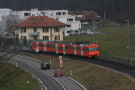 The Mandarinli railcars entered service from 1974.
From 2001 a central low floor carriage was added to most of the railcars.
The Mandarinli railcars received their names due to their distinctive colour.
Towards the end they just operatee on the S7 between Bern and Worb via Bolligen.
[Jan 2018].
The Mandarinli railcars entered service from 1974.
From 2001 a central low floor carriage was added to most of the railcars.
The Mandarinli railcars received their names due to their distinctive colour.
Towards the end they just operatee on the S7 between Bern and Worb via Bolligen.
[Jan 2018].
|
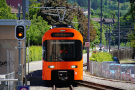 From 2018 onwards new trains were introduced for the line between Bern and Worb.
The new trains named Worbla were delivered by Stadler Rail.
These are four-part electric multiple units with four powered axles.
One such EMA arrives in Ittigen.
[May 2025].
From 2018 onwards new trains were introduced for the line between Bern and Worb.
The new trains named Worbla were delivered by Stadler Rail.
These are four-part electric multiple units with four powered axles.
One such EMA arrives in Ittigen.
[May 2025].
|
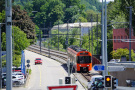 Between Bolligen and Ittigen the railway line is single track for a short stretch.
There are a few other single-track sections on the line.
It also has many level crossings.
Despite these restrictions there is a dense train traffic on the line.
A Worbla train travels in the direction of Bern.
[May 2025].
Between Bolligen and Ittigen the railway line is single track for a short stretch.
There are a few other single-track sections on the line.
It also has many level crossings.
Despite these restrictions there is a dense train traffic on the line.
A Worbla train travels in the direction of Bern.
[May 2025].
|
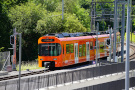 The design of the Worbla trains was supposed to imitate the popular Mandarinli trains.
The RBS consulted passengers on their needs and suggestions and analysed the service in detail.
It was exemplary in its communication with the population at every step.
In this way passengers and locals had a sense of ownership of the new trains.
A Worbla train arrives in Ittigen.
[May 2025].
The design of the Worbla trains was supposed to imitate the popular Mandarinli trains.
The RBS consulted passengers on their needs and suggestions and analysed the service in detail.
It was exemplary in its communication with the population at every step.
In this way passengers and locals had a sense of ownership of the new trains.
A Worbla train arrives in Ittigen.
[May 2025].
|
12_Ittigen.jpg) One of the Mandarinli railcars departs from Ittigen.
These trains were taken out of service in 2018 and 2019.
Because they contained asbestos, they had to be broken up with great care.
[Sep 2015].
One of the Mandarinli railcars departs from Ittigen.
These trains were taken out of service in 2018 and 2019.
Because they contained asbestos, they had to be broken up with great care.
[Sep 2015].
|
12_Worblaufen.jpg) During rush hour, trains travel every 7.5 minutes on the S7 line between Bern and Bolligen (every 15 minutes to Worb).
This is the highest frequency on any of the lines of the S-Bahn Bern.
A Mandarinli railcar in Worblaufen.
[Sep 2015].
During rush hour, trains travel every 7.5 minutes on the S7 line between Bern and Bolligen (every 15 minutes to Worb).
This is the highest frequency on any of the lines of the S-Bahn Bern.
A Mandarinli railcar in Worblaufen.
[Sep 2015].
|
12_Worblaufen.jpg) All RBS lines combine in Worblaufen and continue from there to Bern.
The station of Worblaufen has six platforms and is spanned by a high roof.
In the past RBS trains often travelled on roads.
Therefore even today RBS trains travel on the right track.
A Mandarinli train arrives in Worblaufen.
[Sep 2015].
All RBS lines combine in Worblaufen and continue from there to Bern.
The station of Worblaufen has six platforms and is spanned by a high roof.
In the past RBS trains often travelled on roads.
Therefore even today RBS trains travel on the right track.
A Mandarinli train arrives in Worblaufen.
[Sep 2015].
|
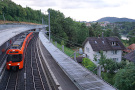 Between Worblaufen and Bern the railway line runs along the cliffs above the Aare river.
S7 trains don't stop at the two stations between Worblaufen and Bern: Tiefenau and Felsenau.
A Worbla-Train rushes through the station of Felsenau.
[Jul 2025].
Between Worblaufen and Bern the railway line runs along the cliffs above the Aare river.
S7 trains don't stop at the two stations between Worblaufen and Bern: Tiefenau and Felsenau.
A Worbla-Train rushes through the station of Felsenau.
[Jul 2025].
|
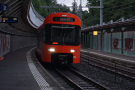 S9 trains do stop in Felsnau.
They run between Bern and Unterzollikofen and by now are also normally operated by Worbla trains.
[Jul 2025].
S9 trains do stop in Felsnau.
They run between Bern and Unterzollikofen and by now are also normally operated by Worbla trains.
[Jul 2025].
|
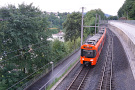 A Worbla train operating near Felsnau as S9.
These trains have very good acceleration and are optimised for efficient passenger exchange, having dwell times of about 20 seconds at intermediate stations.
This allows dense traffic with several trains following each other.
[Jul 2025].
A Worbla train operating near Felsnau as S9.
These trains have very good acceleration and are optimised for efficient passenger exchange, having dwell times of about 20 seconds at intermediate stations.
This allows dense traffic with several trains following each other.
[Jul 2025].
|
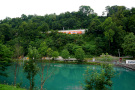 Between Felsenau and Bern a train is travelling high above the Aare river.
A siginicant section of the line also runs in a tunnel, which leads directly to the underground RBS station in Bern,
located underneath the SBB station in Bern.
[Jun 2025].
Between Felsenau and Bern a train is travelling high above the Aare river.
A siginicant section of the line also runs in a tunnel, which leads directly to the underground RBS station in Bern,
located underneath the SBB station in Bern.
[Jun 2025].
|
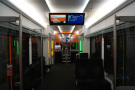 The interior of a Worbla train.
Here it is in the tunnel between Felsenau and Bern.
S9 trains serve just 6 stations: Steinibach is not shown on the on-board monitor until the train is closer to that station.
[Jul 2025].
The interior of a Worbla train.
Here it is in the tunnel between Felsenau and Bern.
S9 trains serve just 6 stations: Steinibach is not shown on the on-board monitor until the train is closer to that station.
[Jul 2025].
|
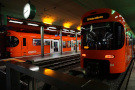 Two Worbla trains in the underground RBS station of Bern.
On the nearby track is a S9 train to Unterzollikofen.
Further away is a S7 train to Worb.
[Jul 2025].
Two Worbla trains in the underground RBS station of Bern.
On the nearby track is a S9 train to Unterzollikofen.
Further away is a S7 train to Worb.
[Jul 2025].
|
12_Bern.jpg) In the underground RBS station in Bern a crowd of passengers leaves a S7 train operated by a Mandarinli railcar.
Even though for a year I travelled nearly daily on RBS trains on the S7 line,
I only took my camera to the area one day after I no longer worked there.
[Sep 2015].
In the underground RBS station in Bern a crowd of passengers leaves a S7 train operated by a Mandarinli railcar.
Even though for a year I travelled nearly daily on RBS trains on the S7 line,
I only took my camera to the area one day after I no longer worked there.
[Sep 2015].
|
12_Bern.jpg) A NExT railcar in the underground station at Bern.
It is about to leave as RegioExpress to Solothurn.
[Sep 2015].
A NExT railcar in the underground station at Bern.
It is about to leave as RegioExpress to Solothurn.
[Sep 2015].
|
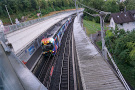 A Seconda-railcar on its way from Jegenstorf to Bern rushes through Felsenau as S8.
At that time this train had an advertising livery.
[Jul 2025].
A Seconda-railcar on its way from Jegenstorf to Bern rushes through Felsenau as S8.
At that time this train had an advertising livery.
[Jul 2025].
|
12_Worblaufen.jpg) From 1991 eleven ABe 4/8 railcars entered into service.
They were delivered by a consortium of Schindler-Waggon-Altenrhein, SIG, and ABB.
Soon an intermediate carriage was added to the railcars and they were called La Prima.
The trains were modernised and enlarged in 2010 and are called Seconda since then.
They are used on the S8 from Bern to Jegenstorf and on the S9 from Bern to Unterzollikofen.
A train has just left Worblaufen.
[Sep 2015].
From 1991 eleven ABe 4/8 railcars entered into service.
They were delivered by a consortium of Schindler-Waggon-Altenrhein, SIG, and ABB.
Soon an intermediate carriage was added to the railcars and they were called La Prima.
The trains were modernised and enlarged in 2010 and are called Seconda since then.
They are used on the S8 from Bern to Jegenstorf and on the S9 from Bern to Unterzollikofen.
A train has just left Worblaufen.
[Sep 2015].
|
12_Worblaufen.jpg) For the Regional Express Bern - Solothurn the RBS introduced fourteen low floor railcars
of the NExT series from 2009.
The trains require 35 minutes for the trip from Bern to Solothurn.
A train travels through Worblaufen, where these Regional Express trains normally don't stop.
[Sep 2015].
For the Regional Express Bern - Solothurn the RBS introduced fourteen low floor railcars
of the NExT series from 2009.
The trains require 35 minutes for the trip from Bern to Solothurn.
A train travels through Worblaufen, where these Regional Express trains normally don't stop.
[Sep 2015].
|
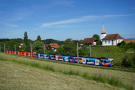 Two Seconda railcar sets pass the Reformed Church in Fraubrunnen.
With the intermediate carriage the trains are actually quite long.
One of the railcars has wrap-around advertising for the shopping centre Shoppyland.
Near Schönbühl there's a separate station for Shoppyland, which is serviced by S8 trains.
[May 2025].
Two Seconda railcar sets pass the Reformed Church in Fraubrunnen.
With the intermediate carriage the trains are actually quite long.
One of the railcars has wrap-around advertising for the shopping centre Shoppyland.
Near Schönbühl there's a separate station for Shoppyland, which is serviced by S8 trains.
[May 2025].
|
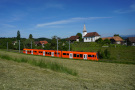 A little later a NExT travels past the church.
The letters NExT stand for Niederflur-Express-Triebzug (Low floor Express Powered train).
They were built by Stadler Rail.
This class is normally used for RegioExpress trains between Bern and Solothurn.
[Mai 2025].
A little later a NExT travels past the church.
The letters NExT stand for Niederflur-Express-Triebzug (Low floor Express Powered train).
They were built by Stadler Rail.
This class is normally used for RegioExpress trains between Bern and Solothurn.
[Mai 2025].
|
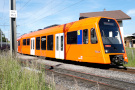 NExT 29 on its way through Fraubrunnen.
With the flat front this train looks distinctive but not beautiful.
It probably was supposed to have a modern look.
[May 2025].
NExT 29 on its way through Fraubrunnen.
With the flat front this train looks distinctive but not beautiful.
It probably was supposed to have a modern look.
[May 2025].
|
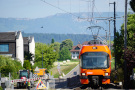 A Seconda railcar arrives in Fraubrunnen.
Their initial name came about because the first class section of the intermediate trailers were marked by the words La Prima in large letters.
Soon this name was transferred to the trains overall and stuck even when first class was no longer offered on these trains.
After a major refurbishment the trains were then named Seconda.
[May 2025].
A Seconda railcar arrives in Fraubrunnen.
Their initial name came about because the first class section of the intermediate trailers were marked by the words La Prima in large letters.
Soon this name was transferred to the trains overall and stuck even when first class was no longer offered on these trains.
After a major refurbishment the trains were then named Seconda.
[May 2025].
|
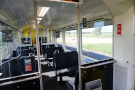 The interior of a Seconda railcar.
These were the first low floor trains of the RBS and a significant step in the design of low-floor vehicles to railway specifications.
[May 2025].
The interior of a Seconda railcar.
These were the first low floor trains of the RBS and a significant step in the design of low-floor vehicles to railway specifications.
[May 2025].
|
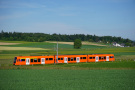 A NExT between Büren zum Hof and Fraubrunnen.
These trains have first and second class sections, but no toilet.
A RegioExpress normally travels the 34 km between Solothurn and Bern in 35 minutes.
[May 2025].
A NExT between Büren zum Hof and Fraubrunnen.
These trains have first and second class sections, but no toilet.
A RegioExpress normally travels the 34 km between Solothurn and Bern in 35 minutes.
[May 2025].
|
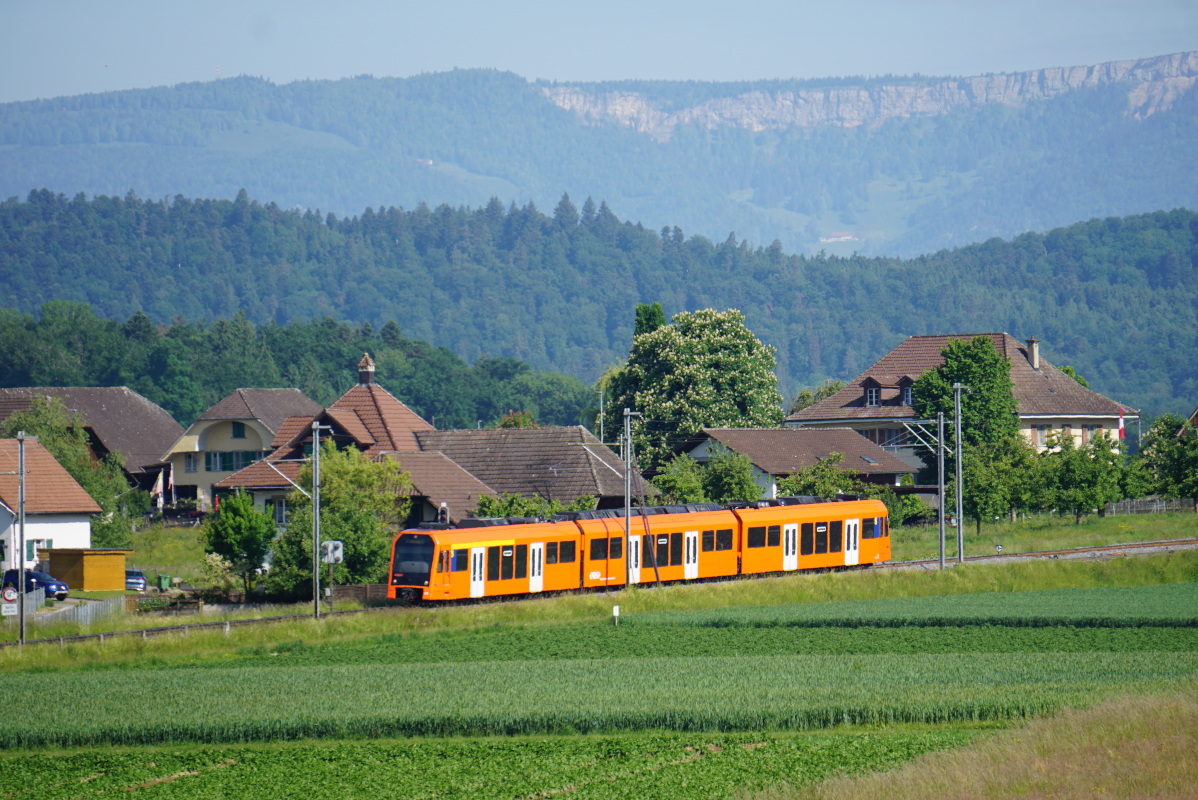
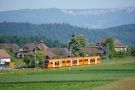 A little earlier the RegioExpress passed through Büren zum Hof.
In the background are the prominent rock formations of the Weissenstein.
[May 2025].
A little earlier the RegioExpress passed through Büren zum Hof.
In the background are the prominent rock formations of the Weissenstein.
[May 2025].
|
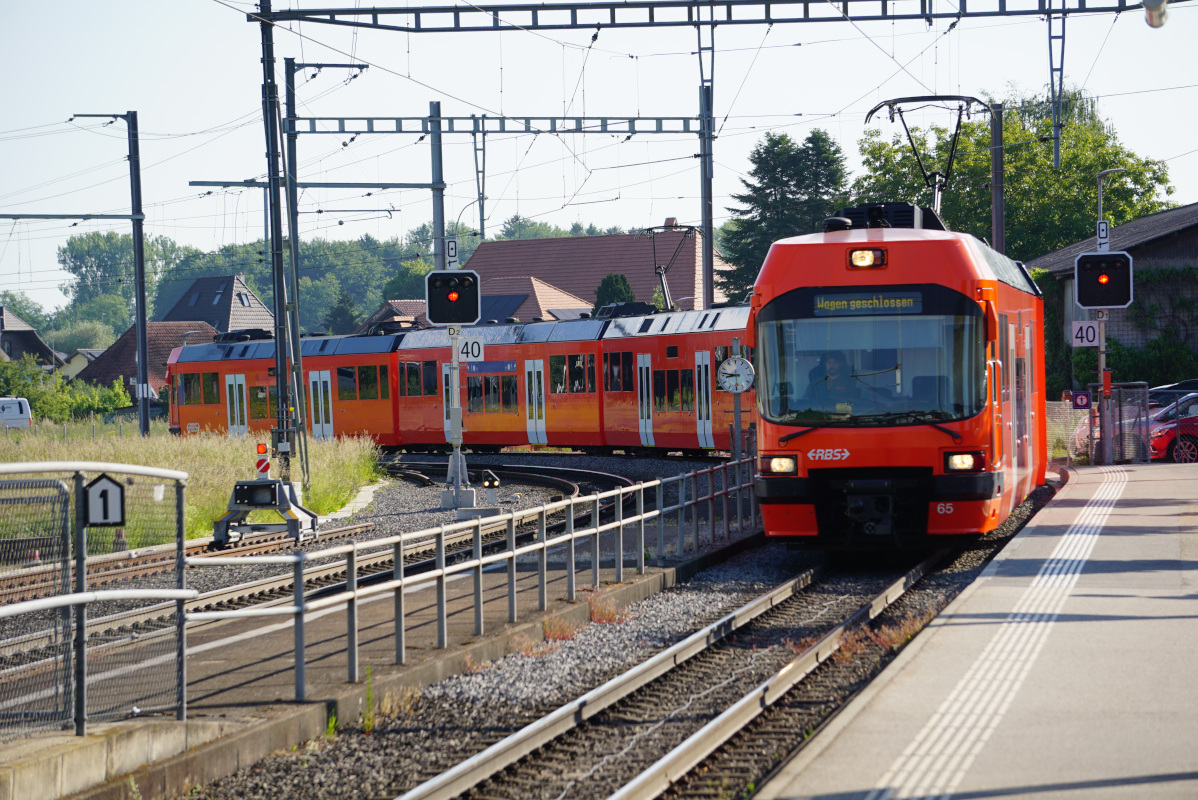
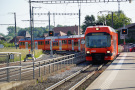 Many of the S8 trains have by now been extended to Bätterkinden, which is now the terminus for the S8,
though about half of the trains only go to Jegenstorf.
In this way a better service could be offered.
A train with two Seconda units enters Bätterkinden Station to head to Bern as S8.
I think that these characteristic rectangular lights still look better than the modern LED lights.
[May 2025].
Many of the S8 trains have by now been extended to Bätterkinden, which is now the terminus for the S8,
though about half of the trains only go to Jegenstorf.
In this way a better service could be offered.
A train with two Seconda units enters Bätterkinden Station to head to Bern as S8.
I think that these characteristic rectangular lights still look better than the modern LED lights.
[May 2025].
|
 In contrast, the Regionalverkehr Bern - Solothurn (RBS) operates a narrow gauge network in the heavily populated area
near Bern. This area is largely German speaking.
Most of the lines are part of the S-Bahn Bern.
A Mandarinli railcar in Vechigen.
[Jan 2018].
In contrast, the Regionalverkehr Bern - Solothurn (RBS) operates a narrow gauge network in the heavily populated area
near Bern. This area is largely German speaking.
Most of the lines are part of the S-Bahn Bern.
A Mandarinli railcar in Vechigen.
[Jan 2018].
 One of the RBS lines is the line from Bern to Worb.
The S7 from Bern to Worb is the S-Bahn line in Bern with the highest number of passenger boardings.
On a misty day a train is underway between Worb and Vechigen.
[Jan 2018].
One of the RBS lines is the line from Bern to Worb.
The S7 from Bern to Worb is the S-Bahn line in Bern with the highest number of passenger boardings.
On a misty day a train is underway between Worb and Vechigen.
[Jan 2018].
 During rush hour two multiple units are coupled together to form a train .
A train on its way to Worb has just departed from Boll and will pass Vechigen.
[Jan 2018].
During rush hour two multiple units are coupled together to form a train .
A train on its way to Worb has just departed from Boll and will pass Vechigen.
[Jan 2018].
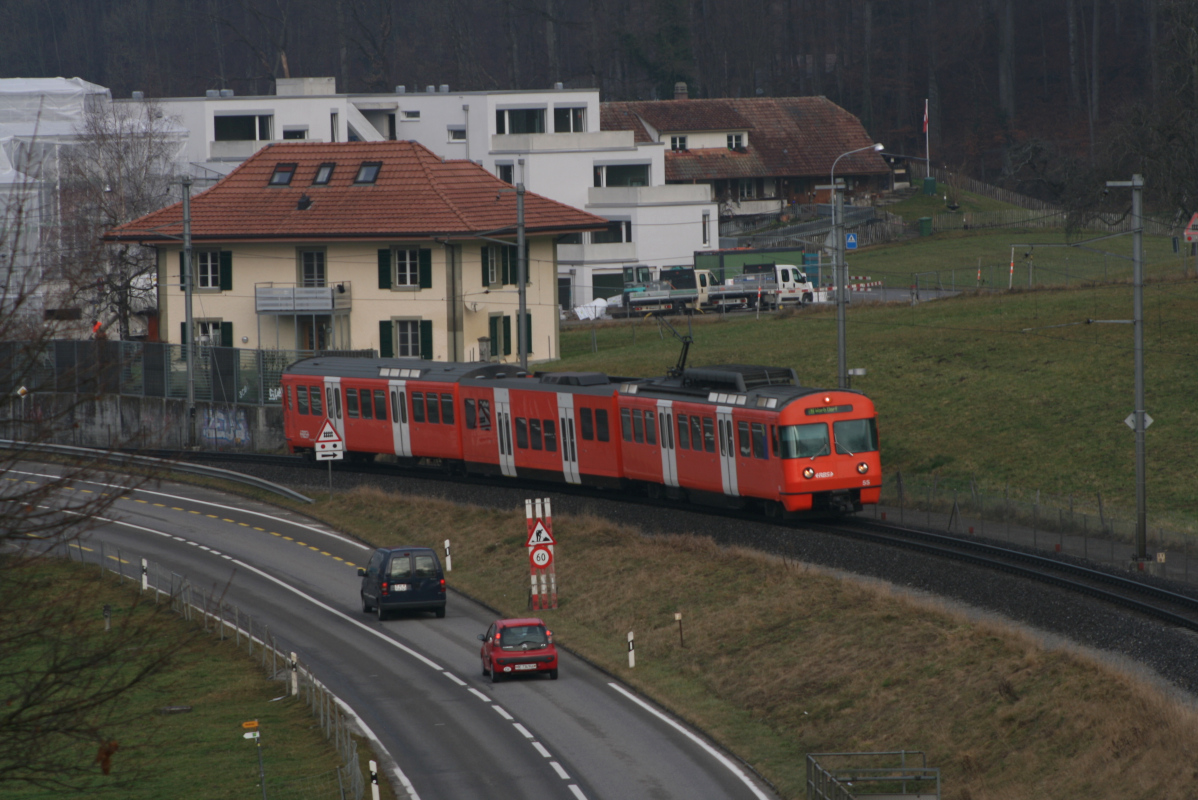 The Mandarinli railcars entered service from 1974.
From 2001 a central low floor carriage was added to most of the railcars.
The Mandarinli railcars received their names due to their distinctive colour.
Towards the end they just operatee on the S7 between Bern and Worb via Bolligen.
[Jan 2018].
The Mandarinli railcars entered service from 1974.
From 2001 a central low floor carriage was added to most of the railcars.
The Mandarinli railcars received their names due to their distinctive colour.
Towards the end they just operatee on the S7 between Bern and Worb via Bolligen.
[Jan 2018].
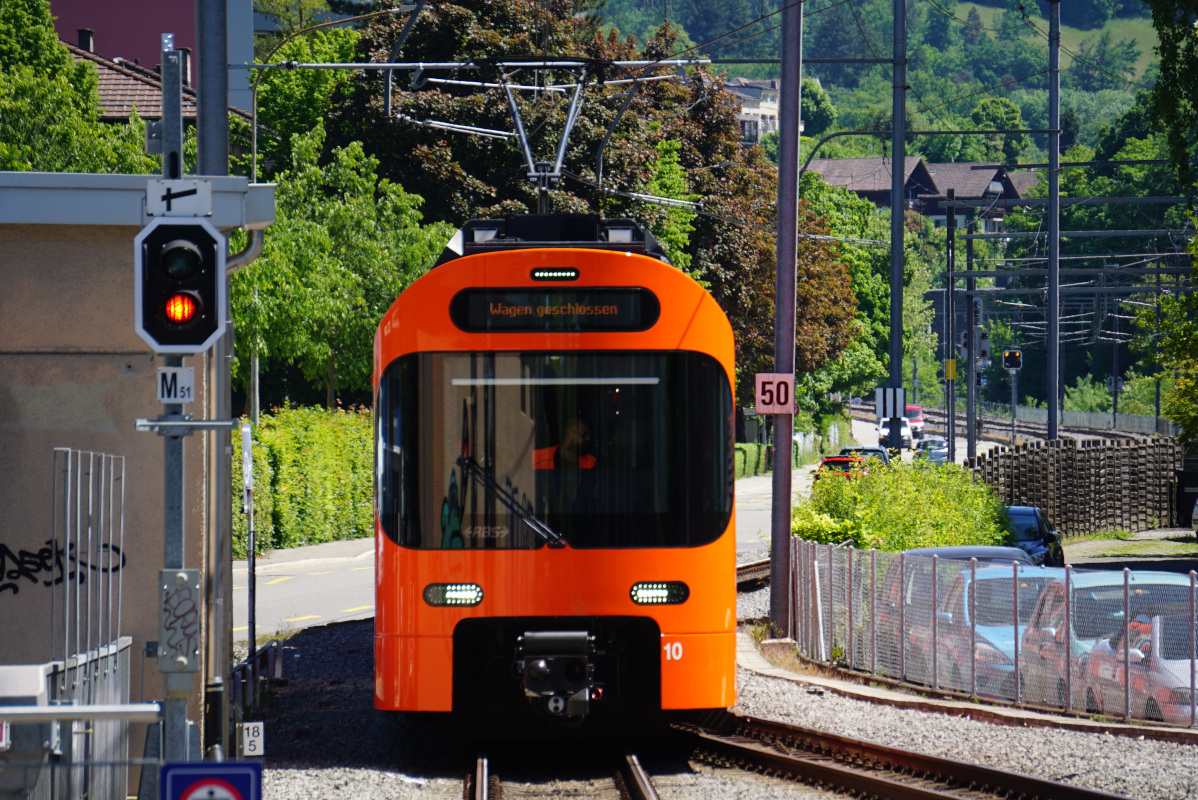 From 2018 onwards new trains were introduced for the line between Bern and Worb.
The new trains named Worbla were delivered by Stadler Rail.
These are four-part electric multiple units with four powered axles.
One such EMA arrives in Ittigen.
[May 2025].
From 2018 onwards new trains were introduced for the line between Bern and Worb.
The new trains named Worbla were delivered by Stadler Rail.
These are four-part electric multiple units with four powered axles.
One such EMA arrives in Ittigen.
[May 2025].
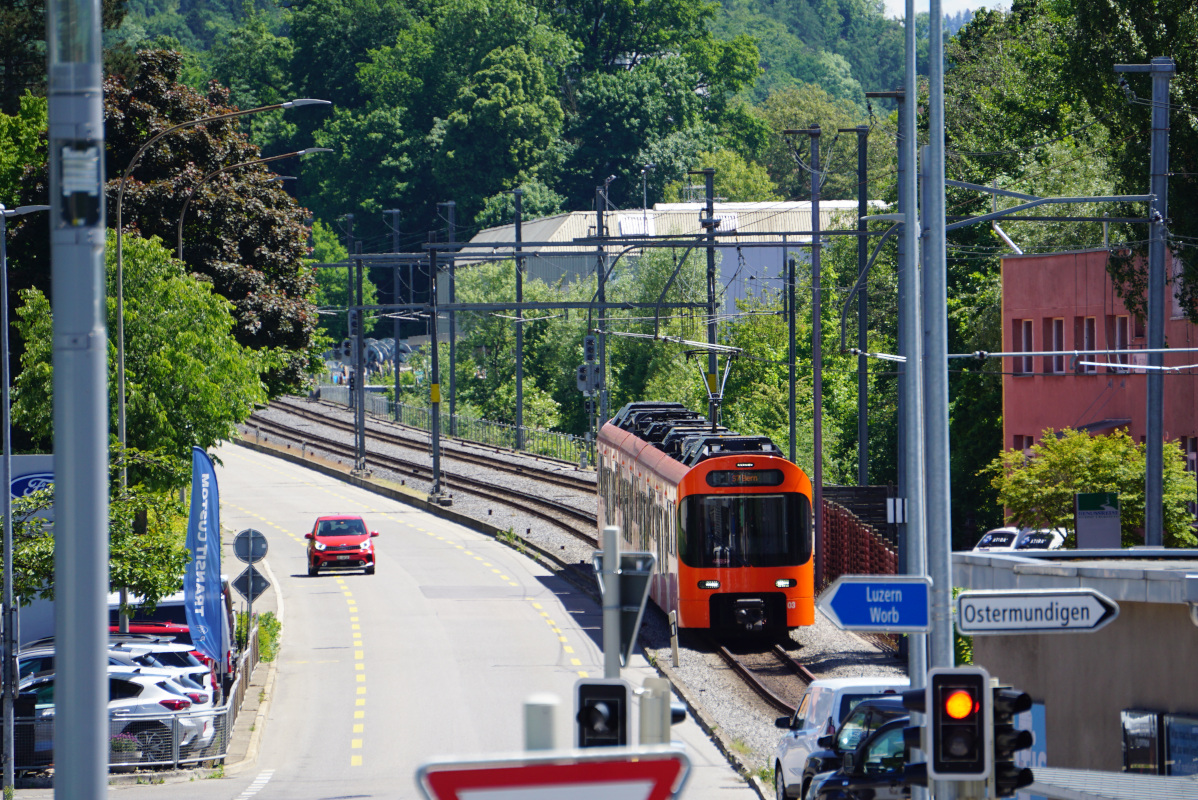 Between Bolligen and Ittigen the railway line is single track for a short stretch.
There are a few other single-track sections on the line.
It also has many level crossings.
Despite these restrictions there is a dense train traffic on the line.
A Worbla train travels in the direction of Bern.
[May 2025].
Between Bolligen and Ittigen the railway line is single track for a short stretch.
There are a few other single-track sections on the line.
It also has many level crossings.
Despite these restrictions there is a dense train traffic on the line.
A Worbla train travels in the direction of Bern.
[May 2025].
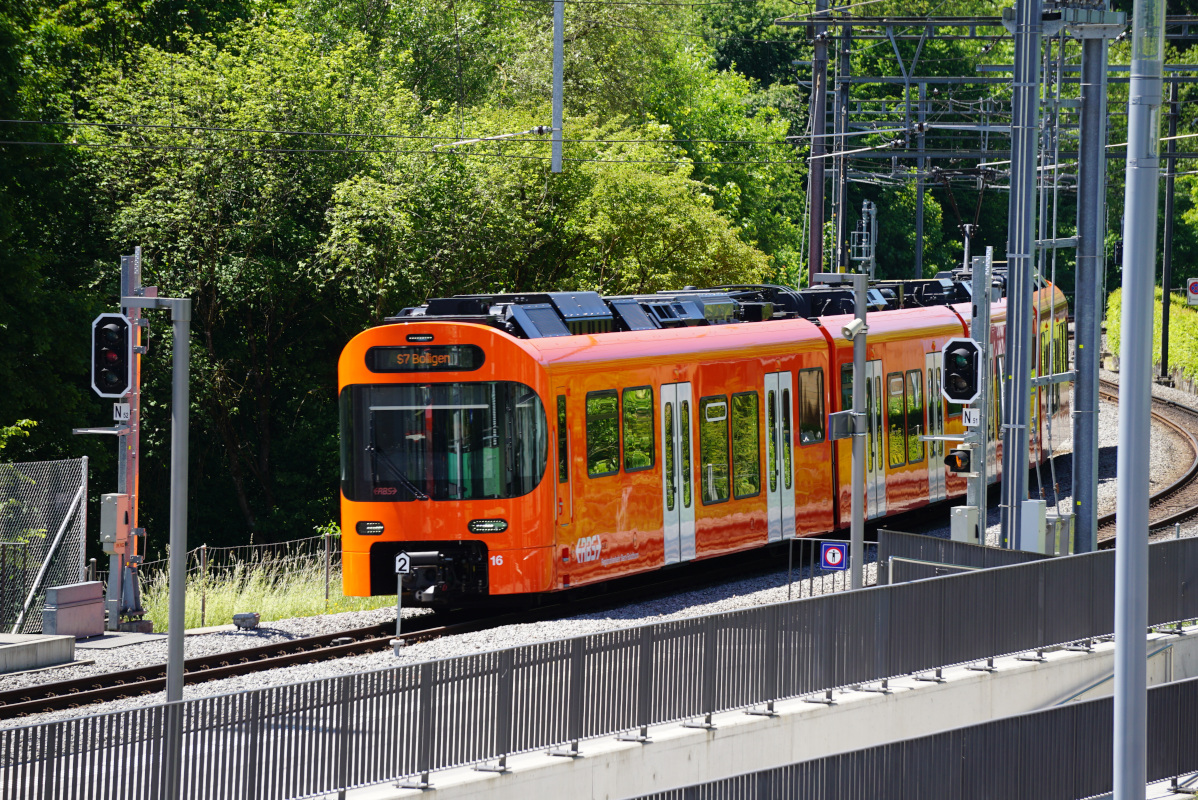 The design of the Worbla trains was supposed to imitate the popular Mandarinli trains.
The RBS consulted passengers on their needs and suggestions and analysed the service in detail.
It was exemplary in its communication with the population at every step.
In this way passengers and locals had a sense of ownership of the new trains.
A Worbla train arrives in Ittigen.
[May 2025].
The design of the Worbla trains was supposed to imitate the popular Mandarinli trains.
The RBS consulted passengers on their needs and suggestions and analysed the service in detail.
It was exemplary in its communication with the population at every step.
In this way passengers and locals had a sense of ownership of the new trains.
A Worbla train arrives in Ittigen.
[May 2025].
12_Ittigen.jpg) One of the Mandarinli railcars departs from Ittigen.
These trains were taken out of service in 2018 and 2019.
Because they contained asbestos, they had to be broken up with great care.
[Sep 2015].
One of the Mandarinli railcars departs from Ittigen.
These trains were taken out of service in 2018 and 2019.
Because they contained asbestos, they had to be broken up with great care.
[Sep 2015].
12_Worblaufen.jpg) During rush hour, trains travel every 7.5 minutes on the S7 line between Bern and Bolligen (every 15 minutes to Worb).
This is the highest frequency on any of the lines of the S-Bahn Bern.
A Mandarinli railcar in Worblaufen.
[Sep 2015].
During rush hour, trains travel every 7.5 minutes on the S7 line between Bern and Bolligen (every 15 minutes to Worb).
This is the highest frequency on any of the lines of the S-Bahn Bern.
A Mandarinli railcar in Worblaufen.
[Sep 2015].
12_Worblaufen.jpg) All RBS lines combine in Worblaufen and continue from there to Bern.
The station of Worblaufen has six platforms and is spanned by a high roof.
In the past RBS trains often travelled on roads.
Therefore even today RBS trains travel on the right track.
A Mandarinli train arrives in Worblaufen.
[Sep 2015].
All RBS lines combine in Worblaufen and continue from there to Bern.
The station of Worblaufen has six platforms and is spanned by a high roof.
In the past RBS trains often travelled on roads.
Therefore even today RBS trains travel on the right track.
A Mandarinli train arrives in Worblaufen.
[Sep 2015].
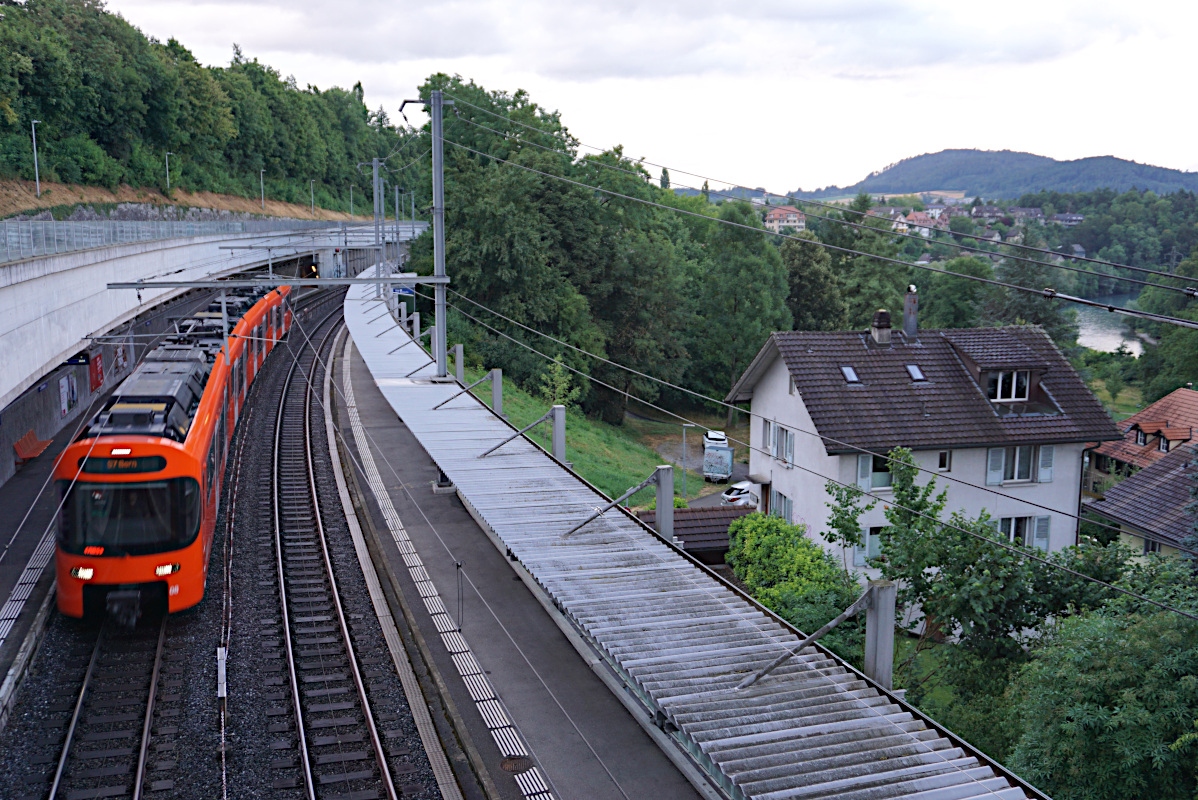 Between Worblaufen and Bern the railway line runs along the cliffs above the Aare river.
S7 trains don't stop at the two stations between Worblaufen and Bern: Tiefenau and Felsenau.
A Worbla-Train rushes through the station of Felsenau.
[Jul 2025].
Between Worblaufen and Bern the railway line runs along the cliffs above the Aare river.
S7 trains don't stop at the two stations between Worblaufen and Bern: Tiefenau and Felsenau.
A Worbla-Train rushes through the station of Felsenau.
[Jul 2025].
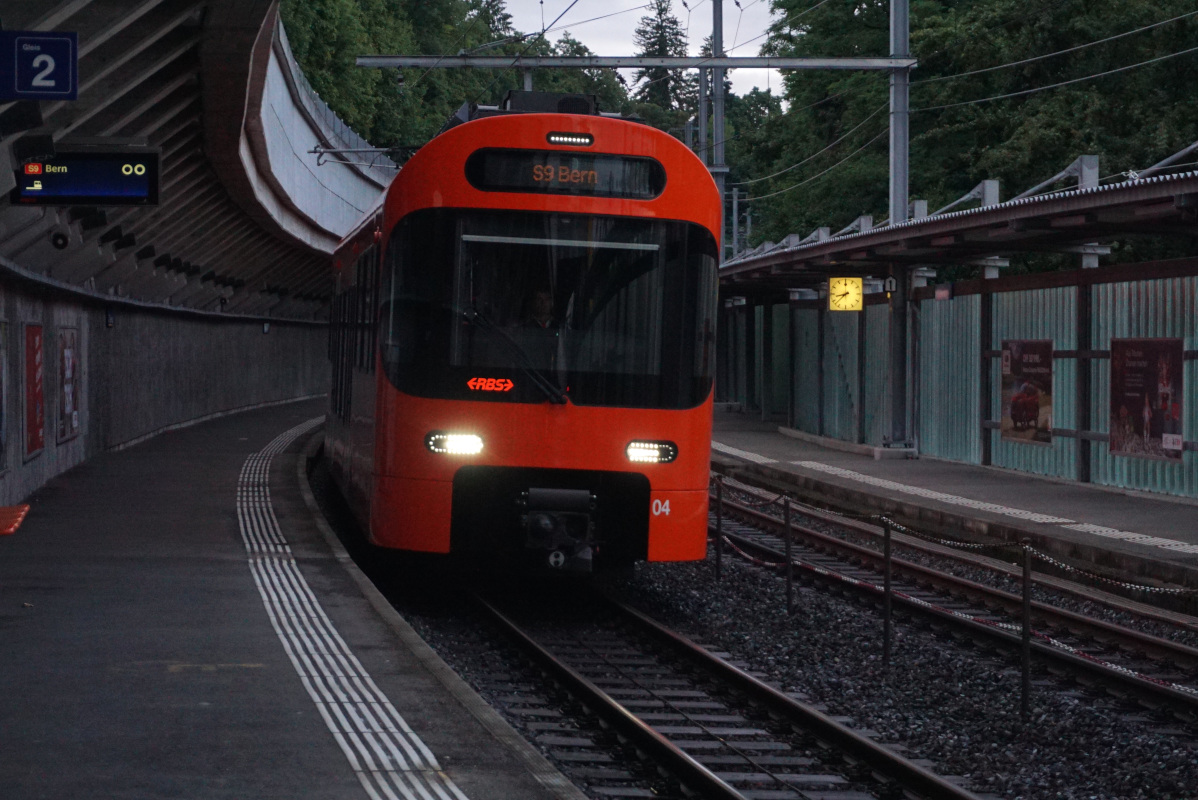 S9 trains do stop in Felsnau.
They run between Bern and Unterzollikofen and by now are also normally operated by Worbla trains.
[Jul 2025].
S9 trains do stop in Felsnau.
They run between Bern and Unterzollikofen and by now are also normally operated by Worbla trains.
[Jul 2025].
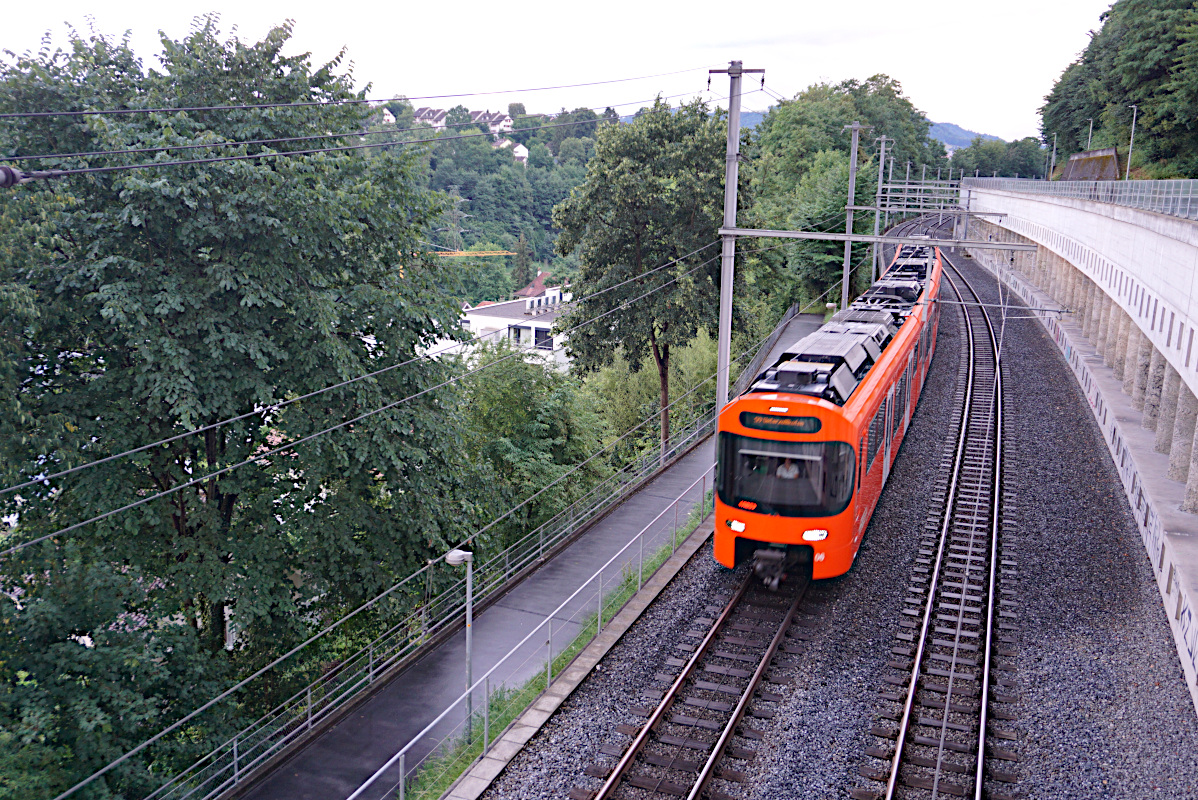 A Worbla train operating near Felsnau as S9.
These trains have very good acceleration and are optimised for efficient passenger exchange, having dwell times of about 20 seconds at intermediate stations.
This allows dense traffic with several trains following each other.
[Jul 2025].
A Worbla train operating near Felsnau as S9.
These trains have very good acceleration and are optimised for efficient passenger exchange, having dwell times of about 20 seconds at intermediate stations.
This allows dense traffic with several trains following each other.
[Jul 2025].
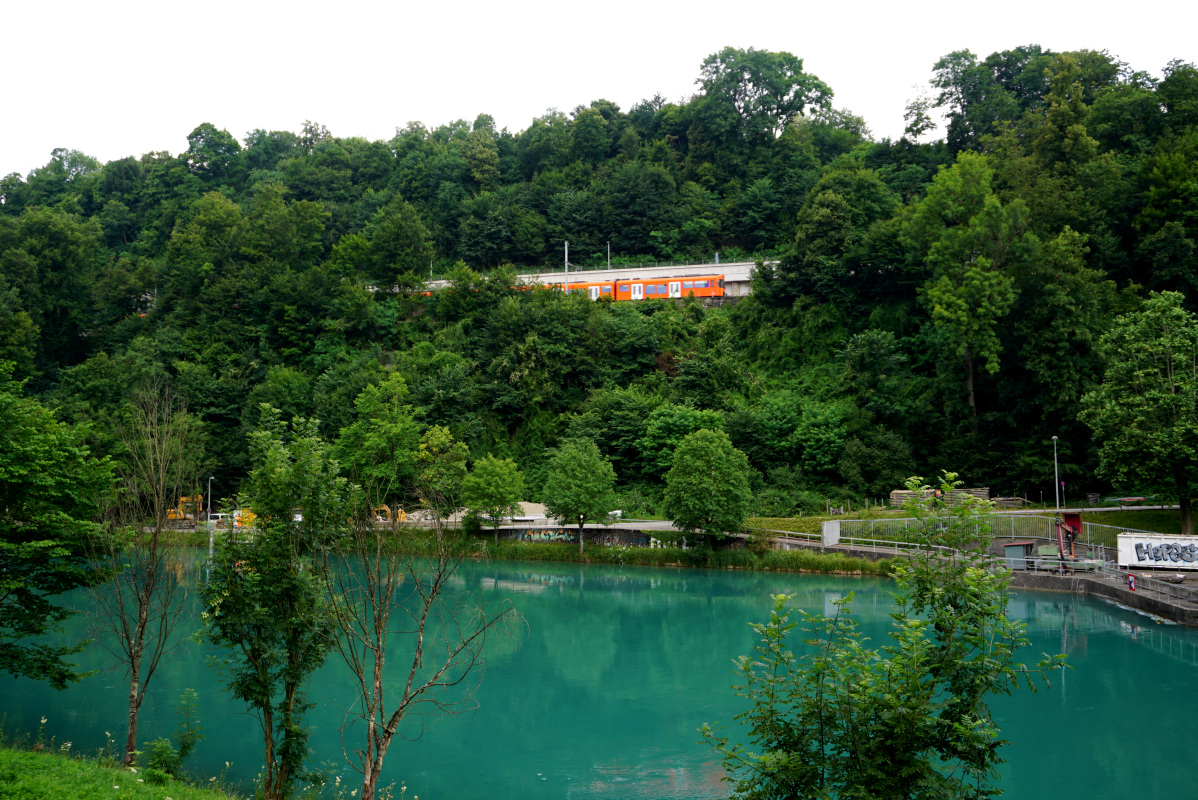 Between Felsenau and Bern a train is travelling high above the Aare river.
A siginicant section of the line also runs in a tunnel, which leads directly to the underground RBS station in Bern,
located underneath the SBB station in Bern.
[Jun 2025].
Between Felsenau and Bern a train is travelling high above the Aare river.
A siginicant section of the line also runs in a tunnel, which leads directly to the underground RBS station in Bern,
located underneath the SBB station in Bern.
[Jun 2025].
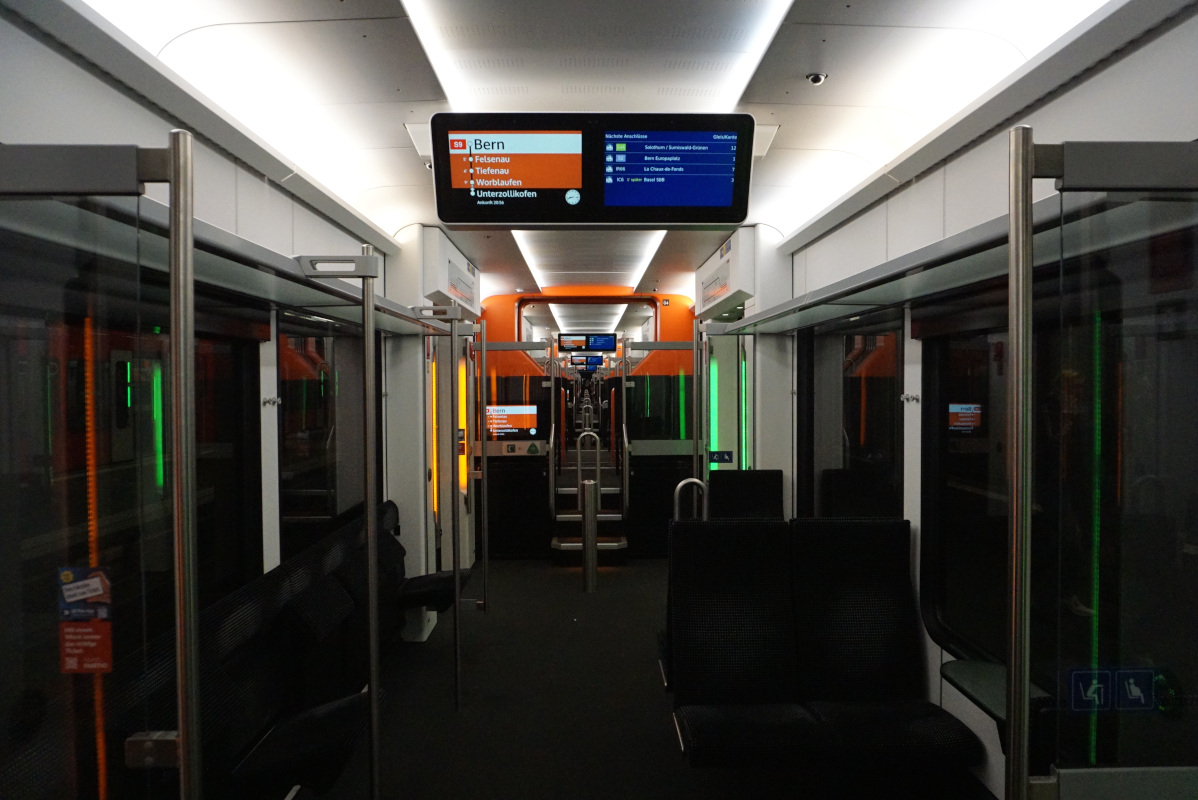 The interior of a Worbla train.
Here it is in the tunnel between Felsenau and Bern.
S9 trains serve just 6 stations: Steinibach is not shown on the on-board monitor until the train is closer to that station.
[Jul 2025].
The interior of a Worbla train.
Here it is in the tunnel between Felsenau and Bern.
S9 trains serve just 6 stations: Steinibach is not shown on the on-board monitor until the train is closer to that station.
[Jul 2025].
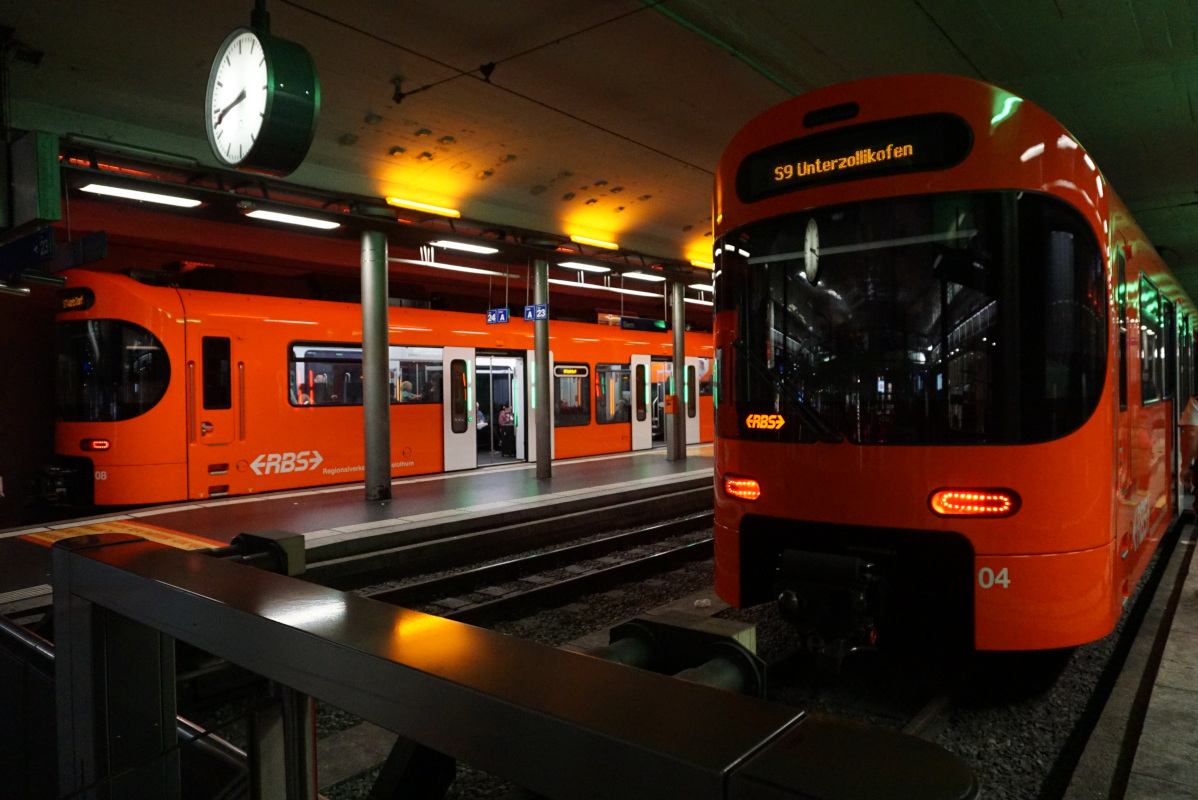 Two Worbla trains in the underground RBS station of Bern.
On the nearby track is a S9 train to Unterzollikofen.
Further away is a S7 train to Worb.
[Jul 2025].
Two Worbla trains in the underground RBS station of Bern.
On the nearby track is a S9 train to Unterzollikofen.
Further away is a S7 train to Worb.
[Jul 2025].
12_Bern.jpg) In the underground RBS station in Bern a crowd of passengers leaves a S7 train operated by a Mandarinli railcar.
Even though for a year I travelled nearly daily on RBS trains on the S7 line,
I only took my camera to the area one day after I no longer worked there.
[Sep 2015].
In the underground RBS station in Bern a crowd of passengers leaves a S7 train operated by a Mandarinli railcar.
Even though for a year I travelled nearly daily on RBS trains on the S7 line,
I only took my camera to the area one day after I no longer worked there.
[Sep 2015].
12_Bern.jpg) A NExT railcar in the underground station at Bern.
It is about to leave as RegioExpress to Solothurn.
[Sep 2015].
A NExT railcar in the underground station at Bern.
It is about to leave as RegioExpress to Solothurn.
[Sep 2015].
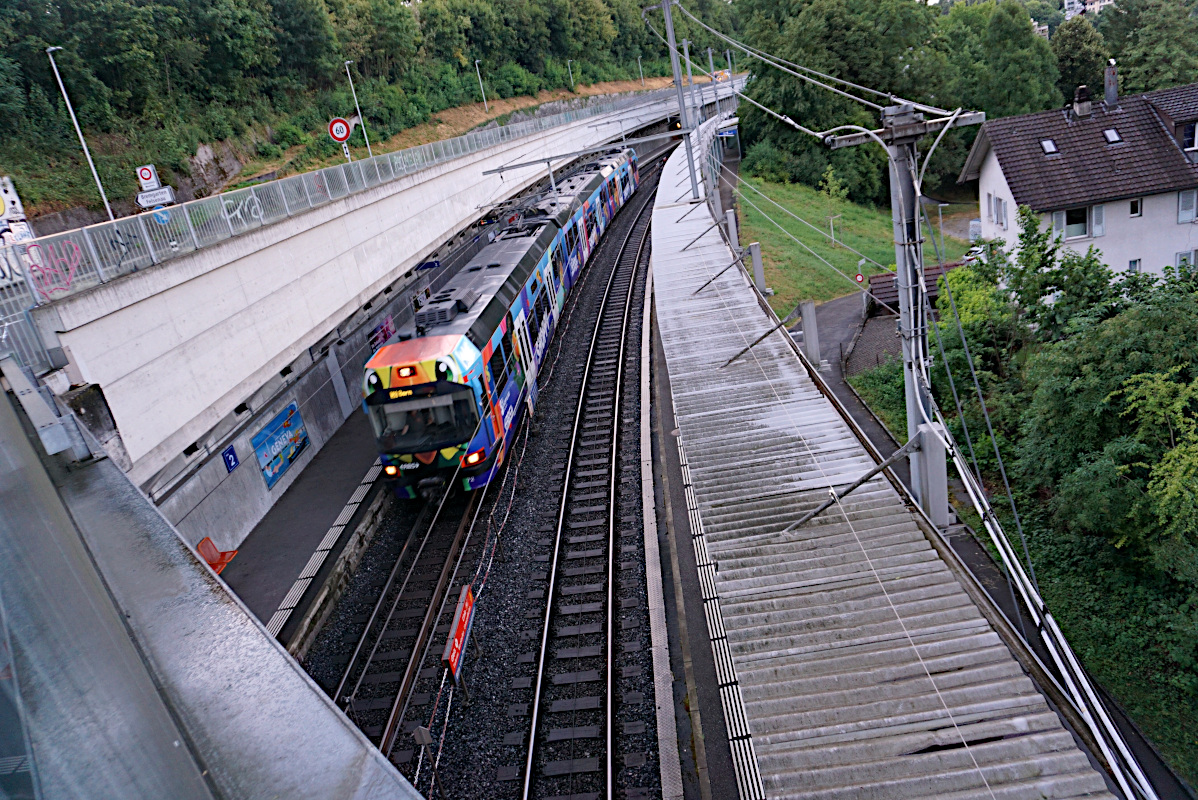 A Seconda-railcar on its way from Jegenstorf to Bern rushes through Felsenau as S8.
At that time this train had an advertising livery.
[Jul 2025].
A Seconda-railcar on its way from Jegenstorf to Bern rushes through Felsenau as S8.
At that time this train had an advertising livery.
[Jul 2025].
12_Worblaufen.jpg) From 1991 eleven ABe 4/8 railcars entered into service.
They were delivered by a consortium of Schindler-Waggon-Altenrhein, SIG, and ABB.
Soon an intermediate carriage was added to the railcars and they were called La Prima.
The trains were modernised and enlarged in 2010 and are called Seconda since then.
They are used on the S8 from Bern to Jegenstorf and on the S9 from Bern to Unterzollikofen.
A train has just left Worblaufen.
[Sep 2015].
From 1991 eleven ABe 4/8 railcars entered into service.
They were delivered by a consortium of Schindler-Waggon-Altenrhein, SIG, and ABB.
Soon an intermediate carriage was added to the railcars and they were called La Prima.
The trains were modernised and enlarged in 2010 and are called Seconda since then.
They are used on the S8 from Bern to Jegenstorf and on the S9 from Bern to Unterzollikofen.
A train has just left Worblaufen.
[Sep 2015].
12_Worblaufen.jpg) For the Regional Express Bern - Solothurn the RBS introduced fourteen low floor railcars
of the NExT series from 2009.
The trains require 35 minutes for the trip from Bern to Solothurn.
A train travels through Worblaufen, where these Regional Express trains normally don't stop.
[Sep 2015].
For the Regional Express Bern - Solothurn the RBS introduced fourteen low floor railcars
of the NExT series from 2009.
The trains require 35 minutes for the trip from Bern to Solothurn.
A train travels through Worblaufen, where these Regional Express trains normally don't stop.
[Sep 2015].
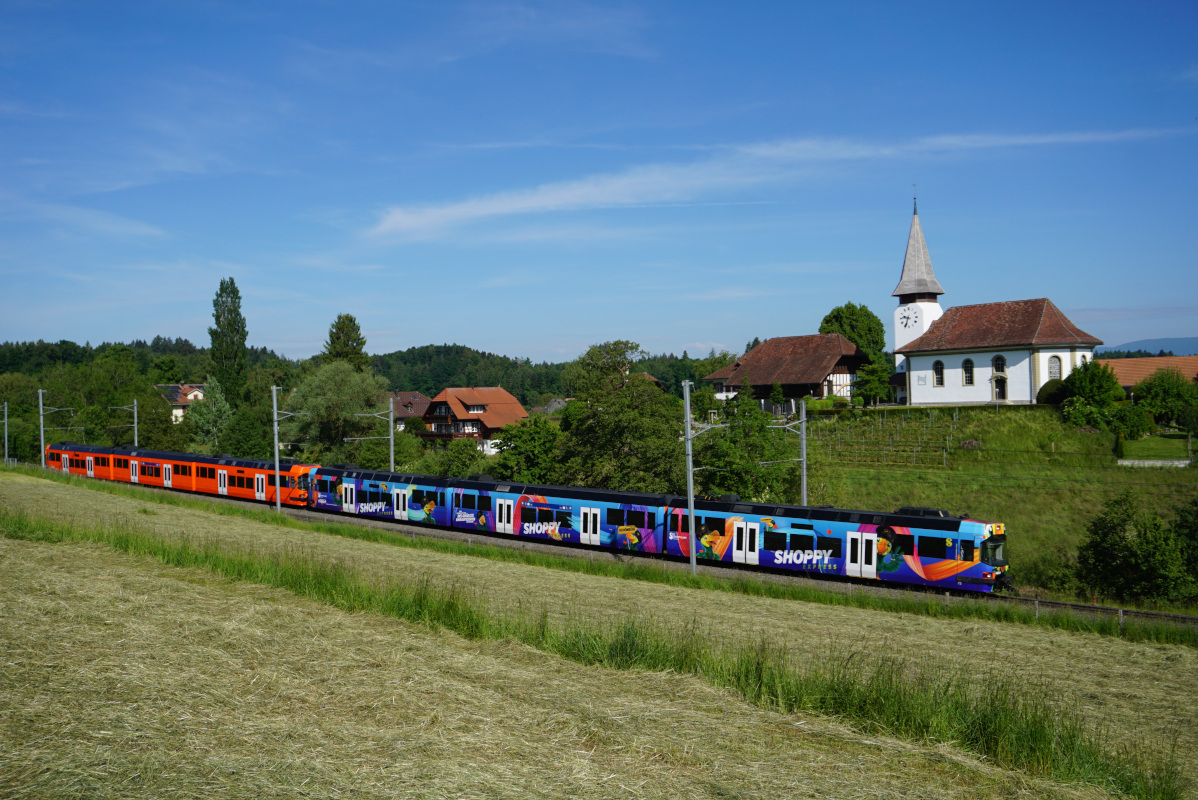 Two Seconda railcar sets pass the Reformed Church in Fraubrunnen.
With the intermediate carriage the trains are actually quite long.
One of the railcars has wrap-around advertising for the shopping centre Shoppyland.
Near Schönbühl there's a separate station for Shoppyland, which is serviced by S8 trains.
[May 2025].
Two Seconda railcar sets pass the Reformed Church in Fraubrunnen.
With the intermediate carriage the trains are actually quite long.
One of the railcars has wrap-around advertising for the shopping centre Shoppyland.
Near Schönbühl there's a separate station for Shoppyland, which is serviced by S8 trains.
[May 2025].
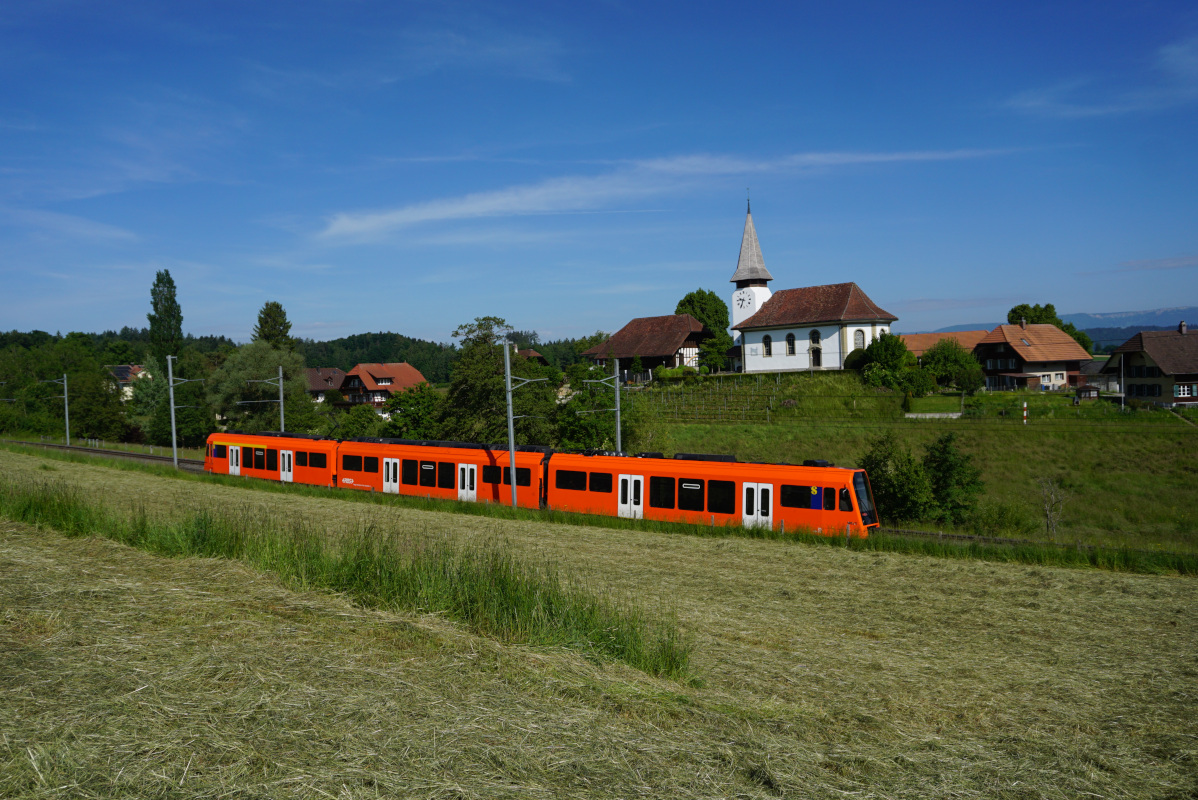 A little later a NExT travels past the church.
The letters NExT stand for Niederflur-Express-Triebzug (Low floor Express Powered train).
They were built by Stadler Rail.
This class is normally used for RegioExpress trains between Bern and Solothurn.
[Mai 2025].
A little later a NExT travels past the church.
The letters NExT stand for Niederflur-Express-Triebzug (Low floor Express Powered train).
They were built by Stadler Rail.
This class is normally used for RegioExpress trains between Bern and Solothurn.
[Mai 2025].
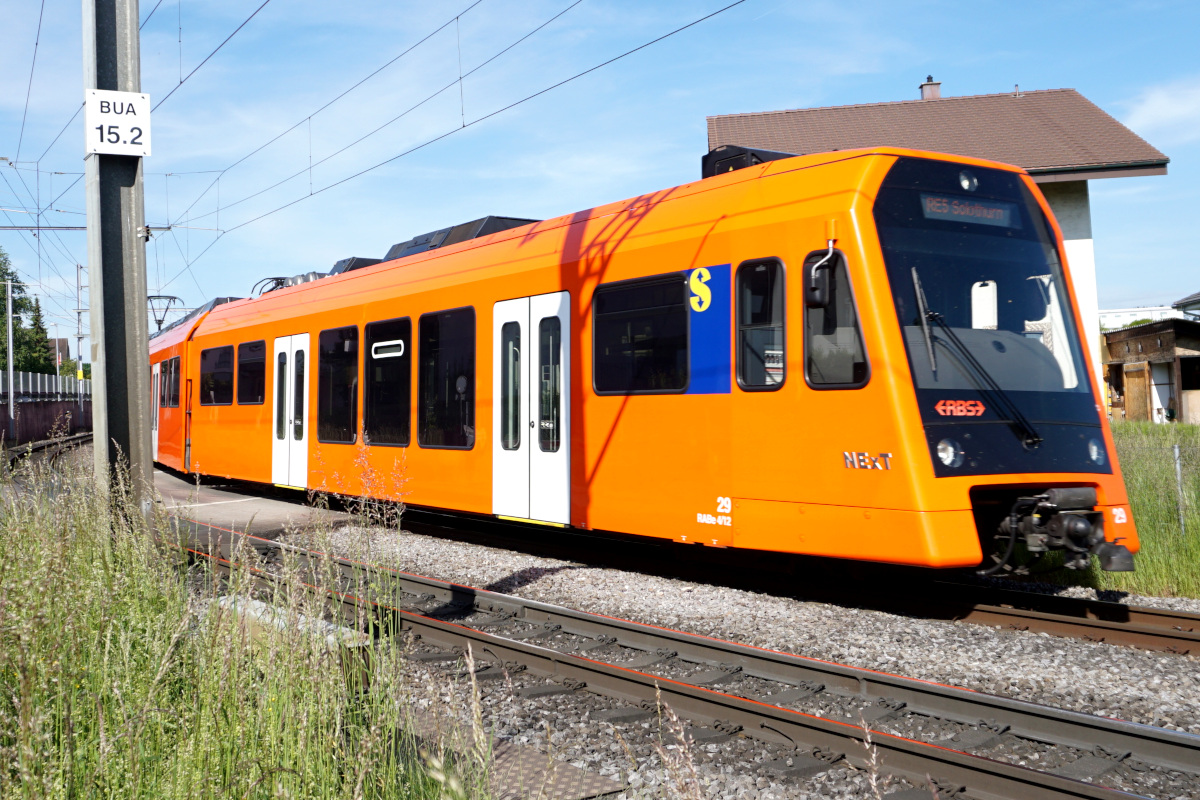 NExT 29 on its way through Fraubrunnen.
With the flat front this train looks distinctive but not beautiful.
It probably was supposed to have a modern look.
[May 2025].
NExT 29 on its way through Fraubrunnen.
With the flat front this train looks distinctive but not beautiful.
It probably was supposed to have a modern look.
[May 2025].
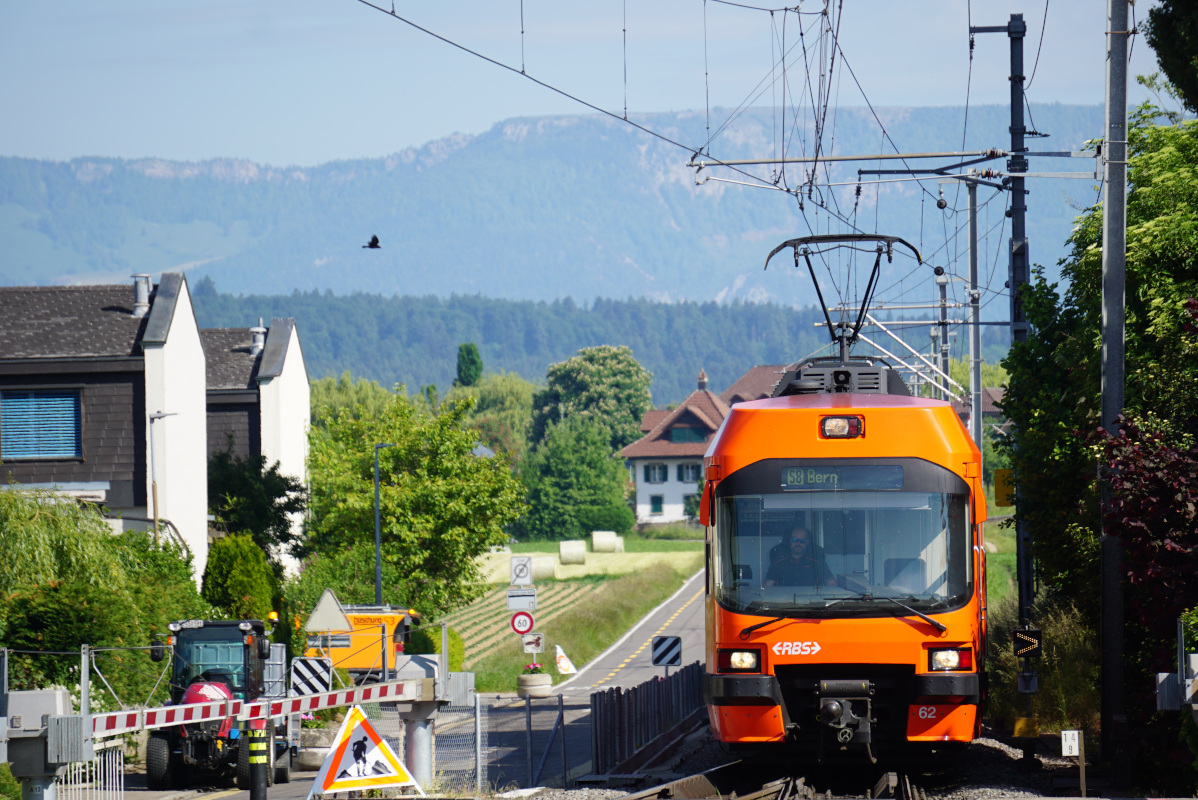 A Seconda railcar arrives in Fraubrunnen.
Their initial name came about because the first class section of the intermediate trailers were marked by the words La Prima in large letters.
Soon this name was transferred to the trains overall and stuck even when first class was no longer offered on these trains.
After a major refurbishment the trains were then named Seconda.
[May 2025].
A Seconda railcar arrives in Fraubrunnen.
Their initial name came about because the first class section of the intermediate trailers were marked by the words La Prima in large letters.
Soon this name was transferred to the trains overall and stuck even when first class was no longer offered on these trains.
After a major refurbishment the trains were then named Seconda.
[May 2025].
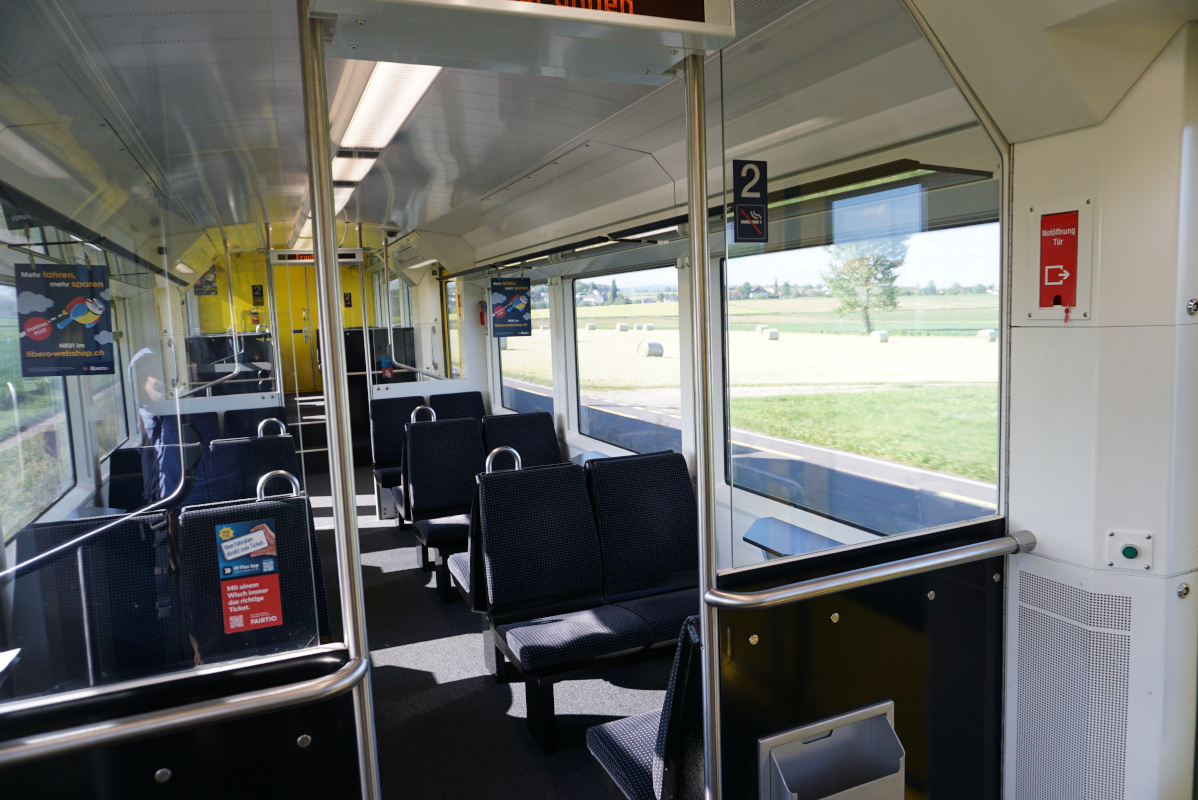 The interior of a Seconda railcar.
These were the first low floor trains of the RBS and a significant step in the design of low-floor vehicles to railway specifications.
[May 2025].
The interior of a Seconda railcar.
These were the first low floor trains of the RBS and a significant step in the design of low-floor vehicles to railway specifications.
[May 2025].
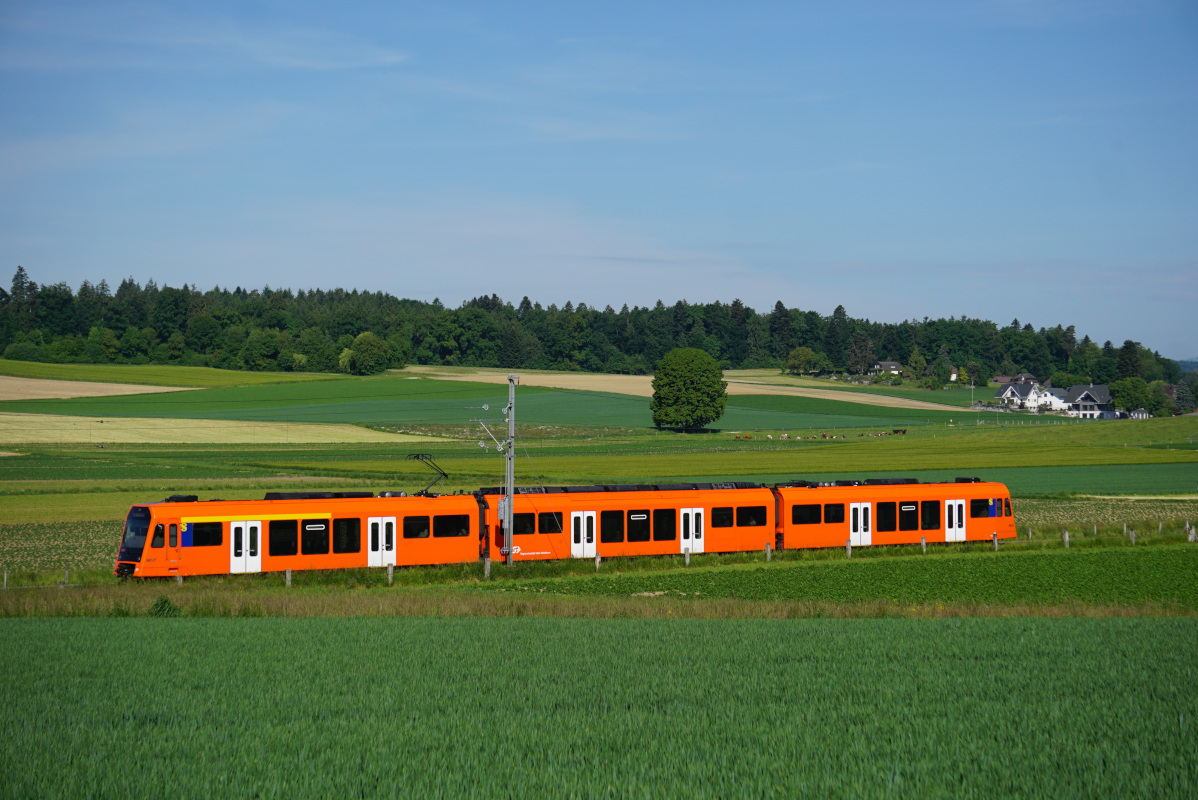 A NExT between Büren zum Hof and Fraubrunnen.
These trains have first and second class sections, but no toilet.
A RegioExpress normally travels the 34 km between Solothurn and Bern in 35 minutes.
[May 2025].
A NExT between Büren zum Hof and Fraubrunnen.
These trains have first and second class sections, but no toilet.
A RegioExpress normally travels the 34 km between Solothurn and Bern in 35 minutes.
[May 2025].
 A little earlier the RegioExpress passed through Büren zum Hof.
In the background are the prominent rock formations of the Weissenstein.
[May 2025].
A little earlier the RegioExpress passed through Büren zum Hof.
In the background are the prominent rock formations of the Weissenstein.
[May 2025].
 Many of the S8 trains have by now been extended to Bätterkinden, which is now the terminus for the S8,
though about half of the trains only go to Jegenstorf.
In this way a better service could be offered.
A train with two Seconda units enters Bätterkinden Station to head to Bern as S8.
I think that these characteristic rectangular lights still look better than the modern LED lights.
[May 2025].
Many of the S8 trains have by now been extended to Bätterkinden, which is now the terminus for the S8,
though about half of the trains only go to Jegenstorf.
In this way a better service could be offered.
A train with two Seconda units enters Bätterkinden Station to head to Bern as S8.
I think that these characteristic rectangular lights still look better than the modern LED lights.
[May 2025].